Introduction
Walking through the streets of Singapore, you will see countless signs advertising “medical aesthetics,” “laser facials,” and “quick fixes.” The sheer volume of options is a testament to the city’s status as a beauty hub, but it also creates a unique problem: decision paralysis. With hundreds of clinics to choose from, how to choose the right aesthetic treatment in Singapore and distinguish between a marketing gimmick and a legitimate medical solution?
Finding a provider is not just about comparing prices or scrolling through Instagram before-and-after photos. It requires due diligence. Your face and body deserve the same level of care you would demand for any other medical procedure. Whether you are looking for preventative anti-ageing or corrective treatments, knowing how to select the right aesthetic clinic Singapore is the most critical step in your journey.
The Golden Rule of Selection: Never choose a treatment before you choose a doctor. A machine, no matter how advanced, is only a tool. The safety and success of your outcome depend entirely on the skill, diagnosis, and ethical standing of the physician wielding that tool.
Table of Contents
- The “Who”: Verifying Your Doctor’s Credentials
- The Consultation: Medical Assessment vs. Sales Pitch
- The “What”: Matching Treatments to Goals
- Red Flags: When to Walk Away
- Frequently Asked Questions
- Conclusion
The “Who”: Verifying Your Doctor’s Credentials
In Singapore, the term “aesthetic doctor” is not a specialist title like “cardiologist.” It refers to a General Practitioner (GP) or specialist who has undergone specific training in aesthetic procedures. Because of these nuances, verification is essential.
The SMC Register & LCP
Your first stop should be the Singapore Medical Council (SMC) website. Every practicing doctor must be registered here. But registration alone isn’t enough.
You need to look for the Letter of Credentialing and Privileging (LCP). The Ministry of Health (MOH) requires doctors to obtain Certificates of Competence (COC) for specific procedures, such as lasers, fillers, or thread lifts. A doctor might be cleared to do lasers but not liposuction. Do not hesitate to ask the clinic staff: “Is Dr. Dr. Vipatsorn (Pat) Shutchaidat, LCP-credentialed for this specific procedure?” A transparent clinic will answer this immediately
Experience vs. Equipment
Marketing often highlights the “latest machine.” While technology is important, experience is vital. A skilled doctor knows how to adjust energy levels for different skin tones to avoid burns, or exactly where to place filler to lift the face without creating a “puffy” look.
Ask your potential provider:
- “How often do you perform this specific treatment?”
- “Do you have case studies of patients with my skin type?”
- “How do you handle complications if they arise?”
The Consultation: Medical Assessment vs. Sales Pitch
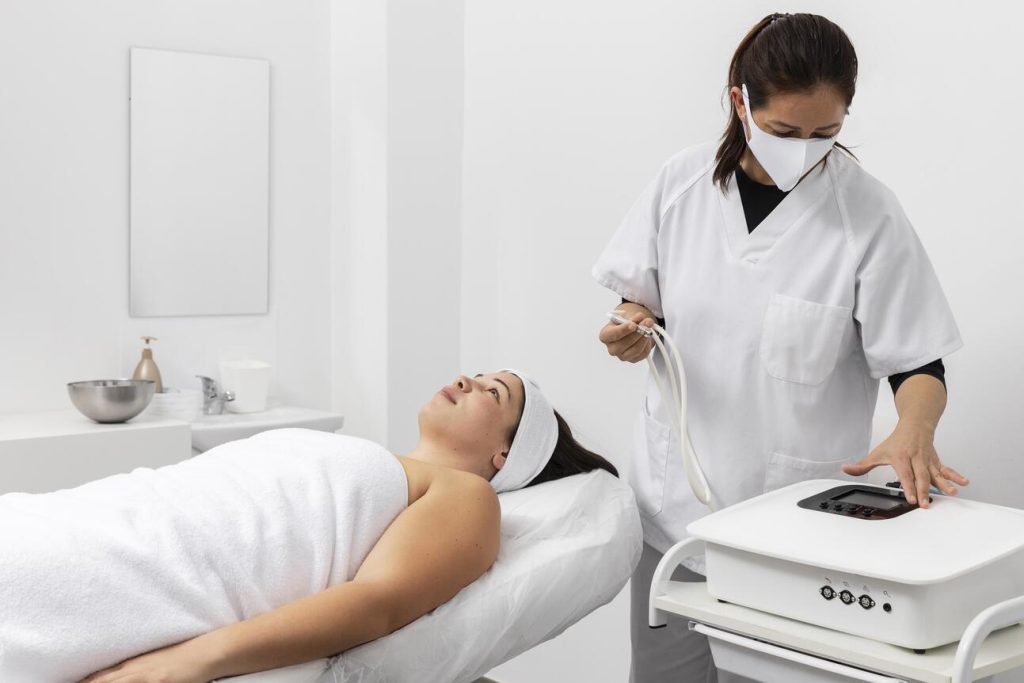
The consultation is your interview opportunity. It should feel like a medical appointment, not a timeshare presentation.
What a Proper Skin Analysis Looks Like
At Asimont Clinic, we believe a diagnosis must come before any prescription. A thorough consultation involves:
- History Taking: Reviewing your medical history, allergies, and lifestyle habits (smoking, sun exposure, sleep).
- Visual & Tactile Exam: The doctor should touch your skin to assess elasticity, hydration, and volume loss.
- Objective Analysis: Many clinics use digital imaging systems to see beneath the surface. This reveals hidden sun damage or vascular issues that the naked eye misses.
If a clinic suggests a treatment package without looking at your skin under a bright light, they are selling, not treating.
The Danger of “Package Pushing”
You have likely heard horror stories of consultants trapping patients in small rooms for hours. This is “hard selling,” and it is frowned upon by ethical medical bodies.
While buying a package can offer value (as most treatments require multiple sessions), the decision should be yours. The focus should be on a treatment plan—a timeline of what you need and why. If the pressure to buy is higher than the concern for your wellbeing, that is a clear signal to leave.
The “What”: Matching Treatments to Goals
Once you trust the doctor, you can discuss the tools. Different goals require different modalities.
Identifying Your “Type”
- The “Pigment Prone”: If your concern is melasma or sunspots, you need a doctor who understands the intricacies of laser physics. Aggressive heat can worsen pigment in Asian skin.
- The “Volume Deficient”: If you look tired due to sunken eyes or cheeks, lasers won’t help. You need structural restoration using fillers or bio-stimulators.
- The “Sagging”: If gravity is the enemy, look for lifting technologies like HIFU.
Asking About FDA/HSA Approvals
The Health Sciences Authority (HSA) regulates medical devices in Singapore. Ensure the machines used are HSA-registered. For example, there are many “imitation” lifting machines that look like the real thing but deliver unstable energy, posing a risk of burns or ineffective results.
Red Flags: When to Walk Away
Trust your instincts. If something feels off, it probably is. Here are specific warning signs:
Impossible Promises
Medical ethics forbid doctors from guaranteeing results. Bodies react differently to treatments. If a clinic promises “100% removal of acne scars” or “permanent results” for non-surgical procedures, they are overpromising and potentially violating advertising guidelines.
Pricing Discrepancies
Price wars are common, but extreme undercutting is dangerous.
- Injectables: Legitimate brands (like Botox, Juvederm, Restylane) have a fixed cost price. If a clinic offers them at a price lower than the market average, they may be using parallel imports (unregulated supply chains) or over-diluting the product.
- Lasers: Cheap laser treatments often mean the doctor rushes through the session or uses low settings to save time, resulting in zero results.
Frequently Asked Questions
- Should I pay for a consultation? Yes. A consultation fee pays for the doctor’s professional time and medical expertise. Clinics that offer “free consultations” often rely on consultants (salespeople) to do the assessment, or they face immense pressure to convert you into a sale to cover the doctor’s time.
- Can I do the treatment on the same day as the consultation? Usually, yes. However, for major procedures or if you are unsure, a good doctor will encourage you to go home and think about it. There should never be pressure to decide “now or never.”
- How do I know if a “Review” is real? Be cautious of forums or aggregate sites where reviews can be bought. Look for consistent mentions of the doctor’s care and process rather than generic praise. Authentic reviews often mention specific details about the recovery or the consultation discussion.
Conclusion
Choosing the right aesthetic doctor in Singapore is an exercise in trust. It requires looking past the glossy advertisements and focusing on the medical fundamentals: safety, credentials, and transparent communication.
Your skin is a lifelong asset. By prioritizing a proper medical diagnosis and verifying the expertise of your provider, you ensure that your aesthetic journey enhances not just your appearance, but your confidence and safety as well.
Start your journey on the right foot. Book a no-obligation consultation with Asimont Clinic today to experience a professional, pressure-free assessment of your skin goals.