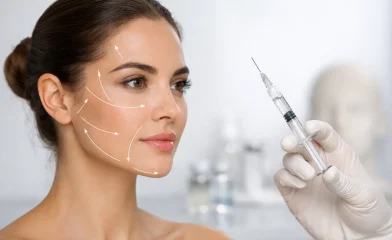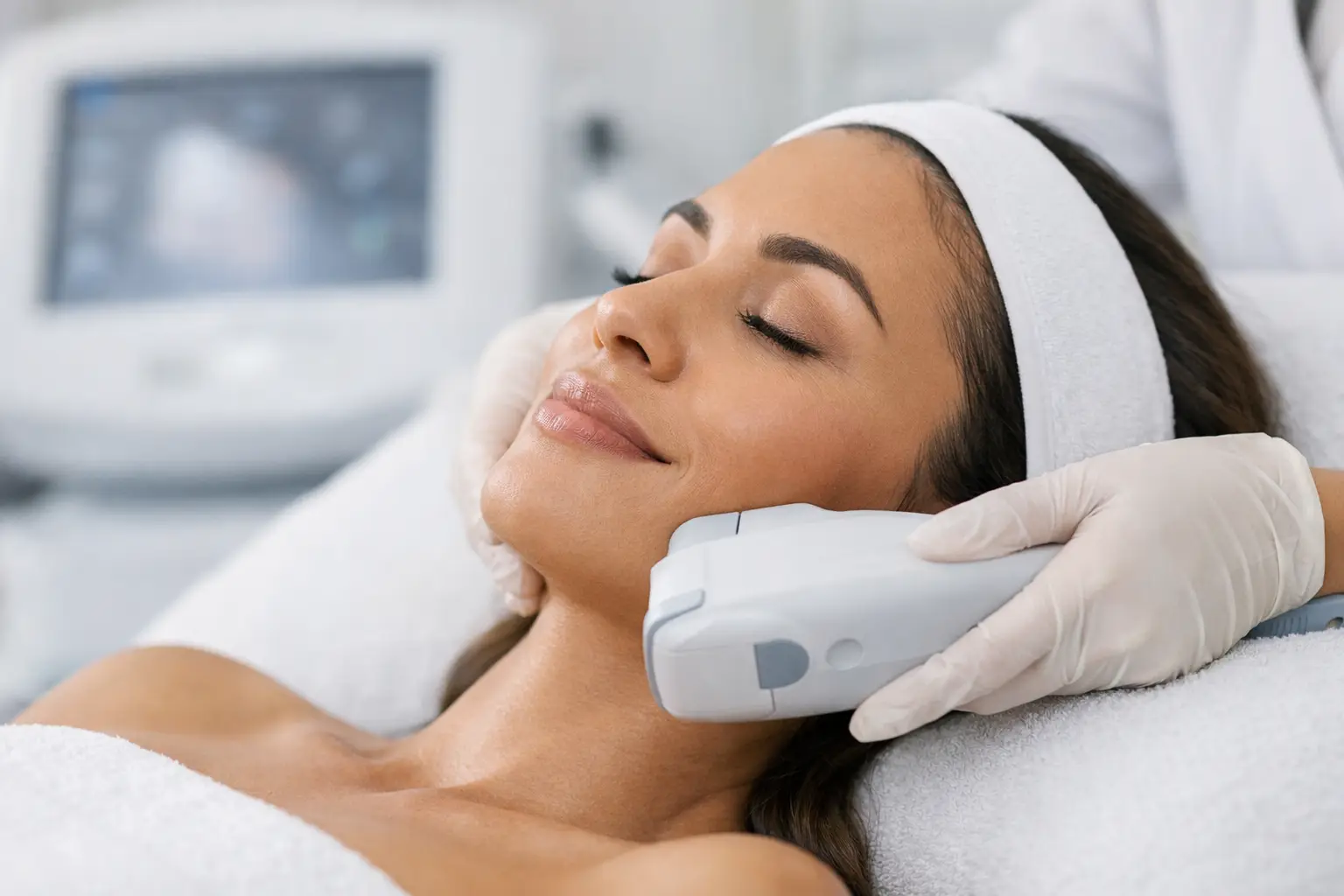
If you have started to notice your jawline softening, your cheeks sitting a little lower, or fine creping forming on your neck, you are not imagining it. Skin laxity is one of the earliest visible signs of ageing — and for many people it begins well before they feel “old enough” to consider surgery. The good news is that a facelift is no longer the only option. HIFU Singapore patients increasingly choose non-surgical lifting to firm and tighten skin, and at Asimont Clinic we use Ultraformer MPT, one of the most advanced HIFU platforms available today.
This guide explains how HIFU works, what it can (and cannot) do, what the treatment actually feels like, and how to decide whether it is right for you.
Why Skin Starts to Sag (It Is Not Just Wrinkles)
Ageing is not only a surface event. Beneath the skin, three things change at once: bone gradually shrinks, the deep fat pads slide downward, and the skin itself becomes thinner and less elastic as collagen production slows. The result is less support and more “give” — so skin that once sat firmly against your facial structure begins to droop.
This is why creams alone rarely satisfy anyone with visible laxity: they work on the surface, while the changes are structural. We unpack the deeper mechanics in our guide to facial volume loss and why we age differently than our parents. HIFU targets one specific part of this picture: the loss of firmness and tightness.

What Is Ultraformer MPT and How Does HIFU Work?
HIFU stands for High-Intensity Focused Ultrasound. Instead of a needle or a blade, it delivers focused ultrasound energy to precise depths beneath the skin, heating tiny points of tissue without damaging the surface. Your body responds to this controlled warming the way it responds to any healthy repair signal — by producing fresh collagen and contracting existing fibres.
Reaching the Right Layers
Ultraformer MPT can be tuned to reach different depths, including the SMAS — the deep supportive layer that surgeons tighten during a facelift. By treating this layer non-surgically, Ultraformer can create a genuine lifting effect, not just superficial smoothing.
It Works With Your Own Collagen
Because the lift comes from your own renewed collagen, results build gradually over 8 to 12 weeks and keep improving for months. This is the same principle behind collagen-stimulating treatments — the idea of investing in your skin’s own scaffolding, which we explore in collagen banking and why women start in their 30s.
Lifting vs. Volumising: HIFU and Sculptra Do Different Jobs
One of the most common points of confusion is the difference between tightening and filling. HIFU tightens and lifts loose skin; it does not replace lost volume. If your main concern is hollowing — flatter cheeks or a tired mid-face — a collagen biostimulator such as Sculptra may suit you better, while HIFU handles the laxity. The two are often combined for a more complete result.
If you are weighing these options, our comparison of Sculptra vs. traditional fillers is a useful next read, and you can learn more on our Sculptra treatment page. If budget is part of your decision, see our guide to how much Sculptra costs in Singapore.
What Areas Can Ultraformer Treat?
- A sagging jawline and early jowls
- Loose skin under the chin
- Drooping brows and hooded upper eyes
- Cheeks and the mid-face
- The neck, including “tech neck” creping
Because the energy is focused and adjustable, treatment is tailored to each zone — a gentler setting around delicate areas and deeper energy where more lift is needed.

Does It Hurt, and Is There Any Downtime?
Most patients describe HIFU as a series of brief warm or prickling sensations as the energy is delivered. Comfort settings and technique make a real difference, which is one reason an experienced provider matters. Afterwards you may have mild redness or slight tenderness for a short while, but there is no wound and no recovery period — you can return to work and apply makeup the same day.
That “walk-in, walk-out” convenience is exactly why time-pressed professionals like HIFU, much like the lunchtime treatments we describe in our article on skin boosters for busy professionals.
Who Is a Good Candidate (and Who Is Not)?
HIFU works best for people with mild to moderate skin laxity who want a natural, gradual lift without surgery. It is ideal from your late 30s through your 50s, or earlier as a preventative measure. It is less suitable if you have very advanced sagging with significant excess skin — in those cases a surgical option may give better value. A proper assessment is the only way to know which group you fall into.
How to Choose a Clinic for HIFU in Singapore
HIFU results depend heavily on the person holding the handpiece: the depth selected, the number of lines delivered, and how carefully your individual face is mapped. The same device can produce a beautiful lift or a disappointing one. Make sure your treatment is planned and performed under qualified medical supervision, and be cautious of unusually cheap “per session” deals that may quietly under-treat. Our guide to the 5 signs of a reliable aesthetic clinic in Singapore is a helpful checklist before you book.
Combining HIFU With Other Treatments
HIFU pairs well with other treatments for a more complete refresh. It is often combined with Ultraboost for added hydration and glow, with skin boosters for surface quality, or with biostimulators for volume. Your plan should be built around your face and your goals rather than a one-size-fits-all package.
The Bottom Line
If you want firmer, more lifted skin without surgery or downtime, Ultraformer MPT is one of the most reliable non-surgical options available in Singapore today. The key is a tailored plan and an experienced hand.
Ready to see if HIFU is right for you? Learn more about Ultraformer MPT or book a consultation with our team for a personalised skin-laxity assessment.