We have all heard the golden rule of skincare: “Drink eight glasses of water a day for glowing skin.” Many of us carry large water bottles around, hoping that drinking more will magically erase dry patches, dullness, and fine lines.
While drinking water is absolutely essential for your overall health, it is rarely the cure for dry or dehydrated skin. If you live in Singapore, you might notice that no matter how much water you drink, your skin still feels tight or looks dull by the end of the day.
Why does this happen? The answer lies in how our bodies process water, the hidden effects of our local weather, and a biological process called trans-epidermal water loss. Here is the real science behind skin hydration and why targeted treatments are often necessary to get that true, lit-from-within glow.
The Difference Between Body Hydration and Skin Moisture
To understand why drinking water fails to plump up your skin, we have to look at how the human body works. When you drink a glass of water, it does not go straight to your face. Instead, it enters your digestive system, gets absorbed into your bloodstream, and is filtered by your kidneys.
Your body is incredibly smart and prioritises survival. It sends that water to your most vital organs first—your brain, heart, lungs, and liver. The skin is the body’s largest organ, but it is also the outermost one. By the time the water you drank has done its job keeping you alive and functioning, very little of it actually reaches the top layers of your skin.
In medical terms, we call this the difference between systemic hydration (hydrating your internal organs) and dermal moisture (water held inside the skin). You can be perfectly healthy and fully hydrated on the inside, yet still suffer from severely dehydrated skin on the outside.
The Singapore Skin Trap: Humidity and Air Conditioning
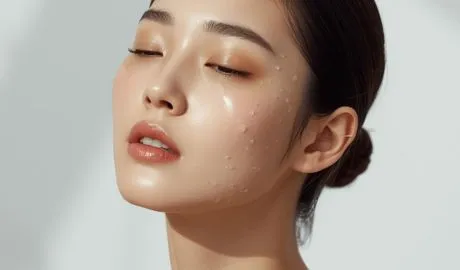
Living in Singapore presents a very unique challenge for our skin. You might think that living in a humid tropical climate would keep your skin moist. However, the reality of our daily lifestyle actually drains moisture away from our faces.
This happens through a process called Trans-Epidermal Water Loss (TEWL). TEWL is the natural process where water travels from the deeper layers of your skin to the surface, and then evaporates into the air. In Singapore, our daily habits speed up this moisture loss dramatically.
Here is how our environment constantly steals our skin’s moisture:
- The Air-Conditioning Effect: We spend most of our time in air-conditioned offices, malls, and bedrooms. Air conditioning works by removing humidity from the air. When the air around you is dry, it pulls moisture directly out of your skin, leaving it tight and flaky.
- The Heat and Sweat Cycle: When we step outside, the intense heat makes us sweat. While sweat feels wet, it actually dehydrates the skin once it evaporates, stripping away our natural protective oils.
- Constant Temperature Shifts: Moving from a freezing office to the hot, humid street and back again stresses the skin barrier. A weakened barrier cannot hold onto water effectively, meaning any moisture you do have leaks out faster.
Why Your Creams and Serums Hit a Wall
Once people realise drinking water is not enough, the next step is usually spending hundreds of dollars on rich moisturisers and hydrating serums.
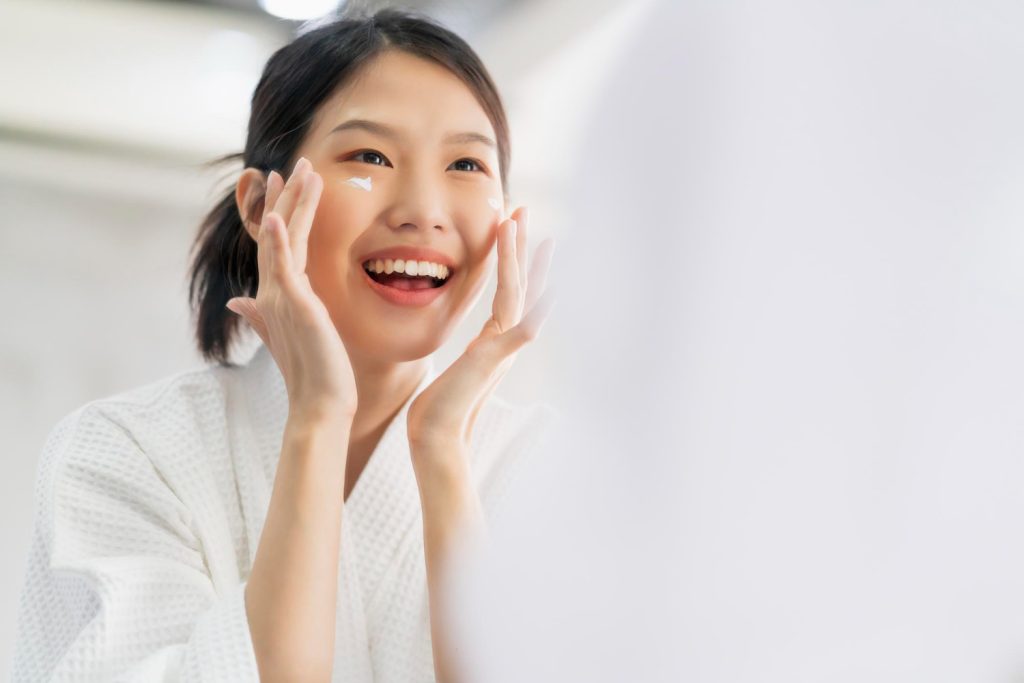
While a good skincare routine is important, topical creams have a physical limit. The top layer of your skin is designed to be a shield. Its main job is to keep bad things (like dirt and bacteria) out, and keep good things (like water) in. Because this shield is so tough, the molecules in most lotions and serums are simply too large to pass through it.
When you apply a serum, it mostly sits on the surface. It can make the top layer of your skin feel soft for a few hours, but it cannot reach down into the deep dermis—the living layer of your skin where true hydration and collagen production happen.
The Deep Fix: Replenishing Moisture Where It Matters
If water doesn’t reach the skin from the inside, and creams can’t reach deep enough from the outside, how do we fix dehydrated skin?
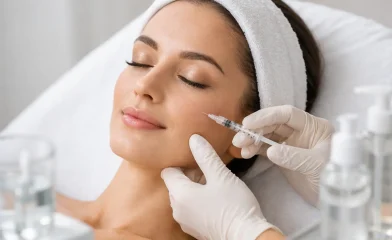
The answer is to place the moisture directly where it belongs. This is why medical aesthetic treatments like skin boosters have become so popular.
Skin boosters are micro-injections of Hyaluronic Acid (HA). Hyaluronic acid is a naturally occurring sugar in our bodies that acts like a sponge. A single molecule of HA can hold up to 1,000 times its own weight in water. When we are young, our skin is packed with HA, which gives it that bouncy, dewy look. As we age, and as we are exposed to sun and stress, our natural HA levels drop.
Instead of rubbing HA on top of the skin, skin boosters bypass the skin’s tough outer barrier. A doctor carefully places tiny droplets of hyaluronic acid right into the deep dermal layer. Once there, the HA acts like an internal reservoir, grabbing onto water and holding it inside the skin for months.
For those dealing with not just dryness, but also dullness and skin damage, advanced options like the Korean skin booster offer a two-in-one solution. These specialised boosters use Polynucleotides (PN) derived from salmon DNA to actively repair the weakened skin barrier while deeply hydrating the tissue. This means your skin not only looks glowing, but actually becomes healthier and better at fighting off the drying effects of air conditioning.
Summary: The True Science Behind the Glow
To achieve the “glass skin” look, we need to treat hydration as a two-part system.
Keep drinking your eight glasses of water a day to keep your body healthy, your energy levels up, and your internal organs happy. But when it comes to your face, remember that drinking water will not stop the Singapore climate from drying out your skin.
To combat trans-epidermal water loss and rebuild your skin’s moisture from the inside out, clinical treatments are often the missing puzzle piece. By directly replacing lost hyaluronic acid, you can give your skin the deep, lasting hydration that neither a water bottle nor a face cream can provide.
Want to learn more about how to protect and enhance your skin? Read more of our expert advice on our Insights blog.